sábado, 8 de septiembre de 2012

REPRODUCCION DE PLATYCERIUM BIFURCATUM


REPRODUCCION DE PLATYCERIUM BIFURCATUM

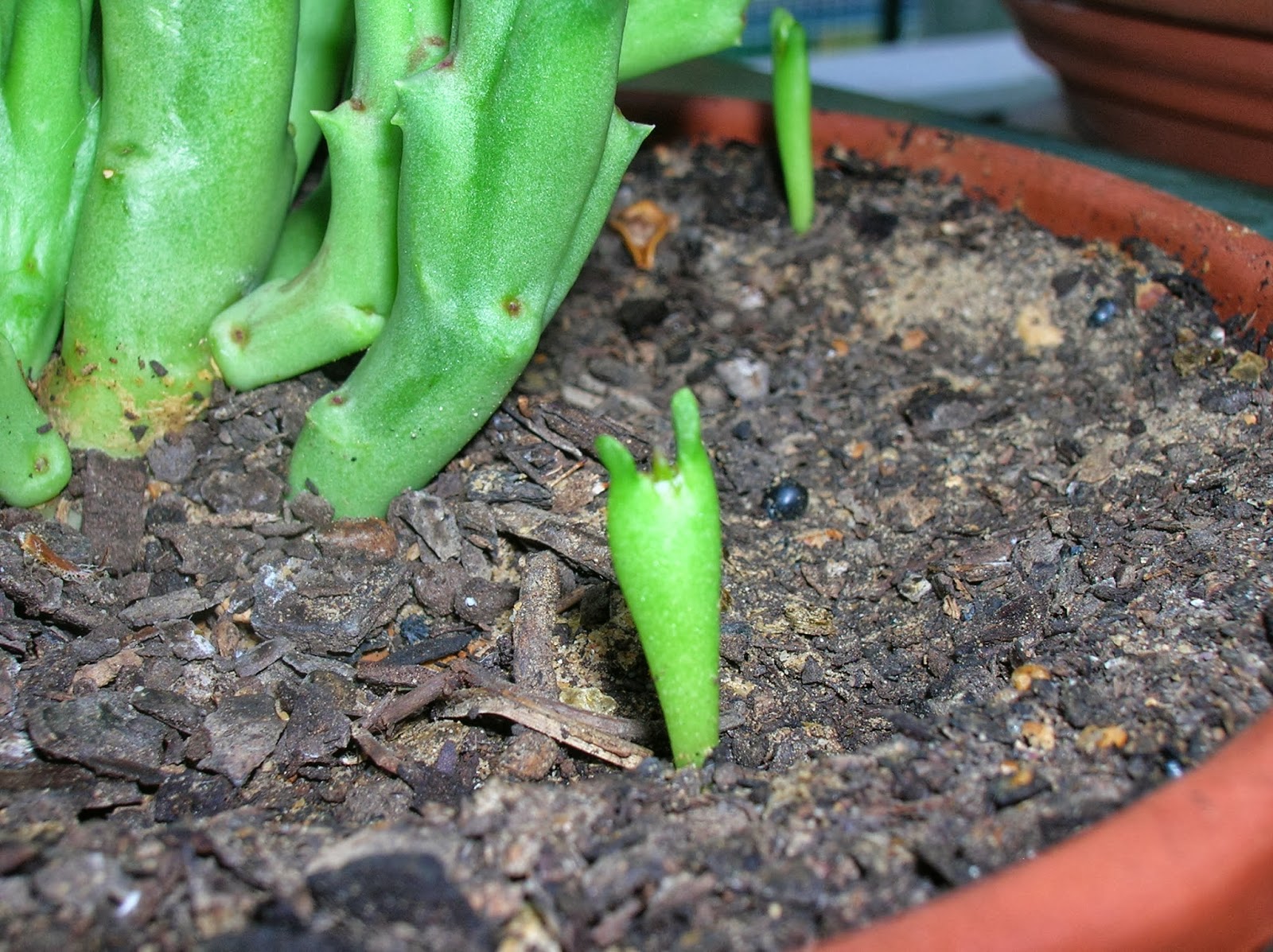
Por primera vez Platycerium bifurcatum produce esporas como se puede observar en las fotos. Hemos intentado reproducir Platycerium superbum por esporas y no lo hemos conseguido. A diferecia de esta especie, Platycerium bifurcatum se puede reproducir separando pequeños vástagos y en este caso, después de un par de intentos, sí lo hemos conseguido. En youtube se pueden ver videos interesantes mostrando cómo hacerlo.

Para ver más fotos de esta planta pincha aquí.


PLATYCERIUM BIFURCATUM PROPAGATION

For first time Platycerium bifurcatum produces spores as you can see in the pictures. We've tried this way of propagation with Platycerium superbum without success. Unlike this last species, Platycerium bifurcatum can be propagated by offsets and, in this case, an after a couple of attemps, we've got it. In youtube you can see some interesting videos about how to do it.

To see more pictures of this plant click here.


Fronda con esporas - Frond with spores


Vástago con frondas nuevas - Offset with new fronds


sábado, 1 de septiembre de 2012

HIBISCUS TILIACEUS


HIBISCUS TILIACEUS  (sin. Talipariti tiliaceum)

Origen: Asia tropical, naturalizado en zonas costeras tropicales y subtropicales del Pacífico y el Indico.

Es un árbol o gran arbusto que puede alcanzar hasta 8 metros de altura. Está muy adaptado al cultivo en zonas costeras, soportando vientos salinos e incluso aguas salobres. Necesita suelo arenoso y bastante agua.

Las hojas son similares a las del tilo de ahí su nombre. Existen cultivares con hojas variegadas o de color púrpura. En el ejemplar de Recregarden las hojas jóvenes son de color burdeos y luego se vuelven verdes.

Como sucede en otras especies de esta familia, las flores cambian de color: se abren de color amarillo y cambian a naranja o rojizo.

La reproducción es por semillas o esquejes.

Sólo soporta heladas muy débiles.


English version:
Origin: Tropical Asia, naturalised throughout tropical and subtropical shores of Pacific and Indian Oceans. 
Common name: Cotton-tree, Cottonwood, Mahoe, Sea Hibiscus.
It's a big shrub or little tree that grows to 8 metres tall. Well adapted to grow in coastal areas, it's tolerant of salt spray and stands brackish water.
Leaves are similar to linden ones hence its specific name. There're cultivars with variegated or purplish leaves. Recregarden specimen has purple young leaves that turn to deep green later.
Like other plants in the mallow family flowers change their color as they age, opening yellow and turning dull orange or reddish.
Propagation is by seeds or cuttings.
It withstands only very light frosts.

domingo, 26 de agosto de 2012

ORBEA VARIEGATA


ORBEA VARIEGATA  (sin. Stapelia vaiegata)

Origen: Sudáfrica

Es una pequeña suculenta, con tallos de porte rastrero (idónea para cestas colgantes), que no alcanzan más de 10 cm de altura.

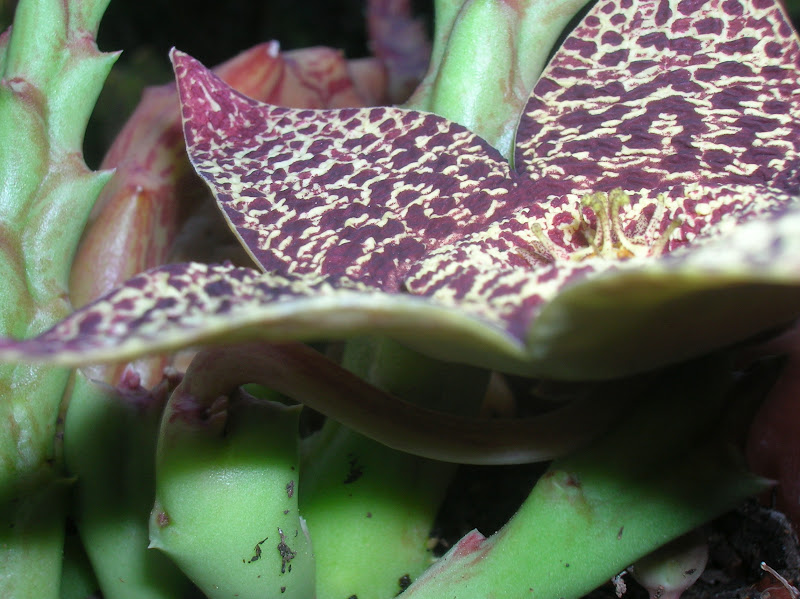
Lo más característico son sus flores, muy grandes en comparación con el tamaño de la planta y de forma estrellada. Estas flores exhalan un olor desagradable (afortunadamente no muy fuerte) similar a la de carne en descomposición y tienen tanto color como textura que recuerdan a un trozo de carne. Esto es así porque son polinizadas por moscas que se sienten atraídas por el aspecto y olor de la flor, llegando incluso a depositar sus larvas en la planta como harían con un trozo de carne (larvas que mueren al no poder alimentarse de la flor). En algunas fotos puede verse a una mosca depositando sus larvas y en otras fotos se observa en la parte inferior derecha de la flor unas pequeñas "cosas" blancas, que son larvas recién depositadas.

Se reproduce muy fácilmente por esquejes que deben dejarse secar durante unos días antes de plantarlos. Y también por semillas que germinan con facilidad y sin mayores cuidados. 

Soporta heladas débiles con tiempo seco.


English version:
Origin: South Africa
Common names: Toas cactus, Star flower, Starfish flower
It's a little succulent with semi postrate creeping stems to 10 cm tall.
It has big starfish-shaped flowers that are patterned and smell (not too strong fortunately) resembling roting meat to attract the flies which pollinate them. Sometimes the flies even lay their larvae on the flowers but they starve to death as they can't eat the flower. In some pictures you can see a fly laying its larvae and in other pictures you can observe some little white things in the right lower part of the flower (larvae).
Propagation is very easy by cuttings dried off for a few days before planting, and by seeds also. They selfseed easily.
They withstand light frosts with dry weather.
 

Actualizado a 31/10/2014