sábado, 10 de abril de 2010

RHAPHIOLEPIS X DELACOURII


RHAPHIOLEPIS X DELACOURII

Origen: híbrido entre R. indica y R. umbellata, nativas del sur de China la primera y de Japón y Corea la segunda.

Es un arbusto que puede alcanzar algo menos de un metro y medio de altura.

Florece en primavera.

Se reproduce por esquejes.

Resiste heladas moderadas.


English version:
Origin: hybrid between R. indica (native to Southern China) and R. umbellata (native to Japan and Korea)
Common name: hybrid Indian Hawthorn
It´s a shrub that grows to a height of one metre and a half.
It flowers in spring.
Propagation is by cuttings.
It withstands moderate frosts.

Actualizado a 9/04/2011

miércoles, 7 de abril de 2010

LA GLICINIA FLORECE


LA GLICINIA FLORECE

Después de un lluvioso invierno, llega la primavera y la espectacular floración de la glicinia (flores lilas), acompañadas de la cassia (flores amarillas) y de un rosal sarmentoso de flores blancas.


WISTERIA IS IN FLOWER

After a very rainy winter, spring has come and with it the outstanding flowering of the wisteria (blue-violet flowers) with the yellow flowers of the cassia and a white scrambling rose.

sábado, 3 de abril de 2010

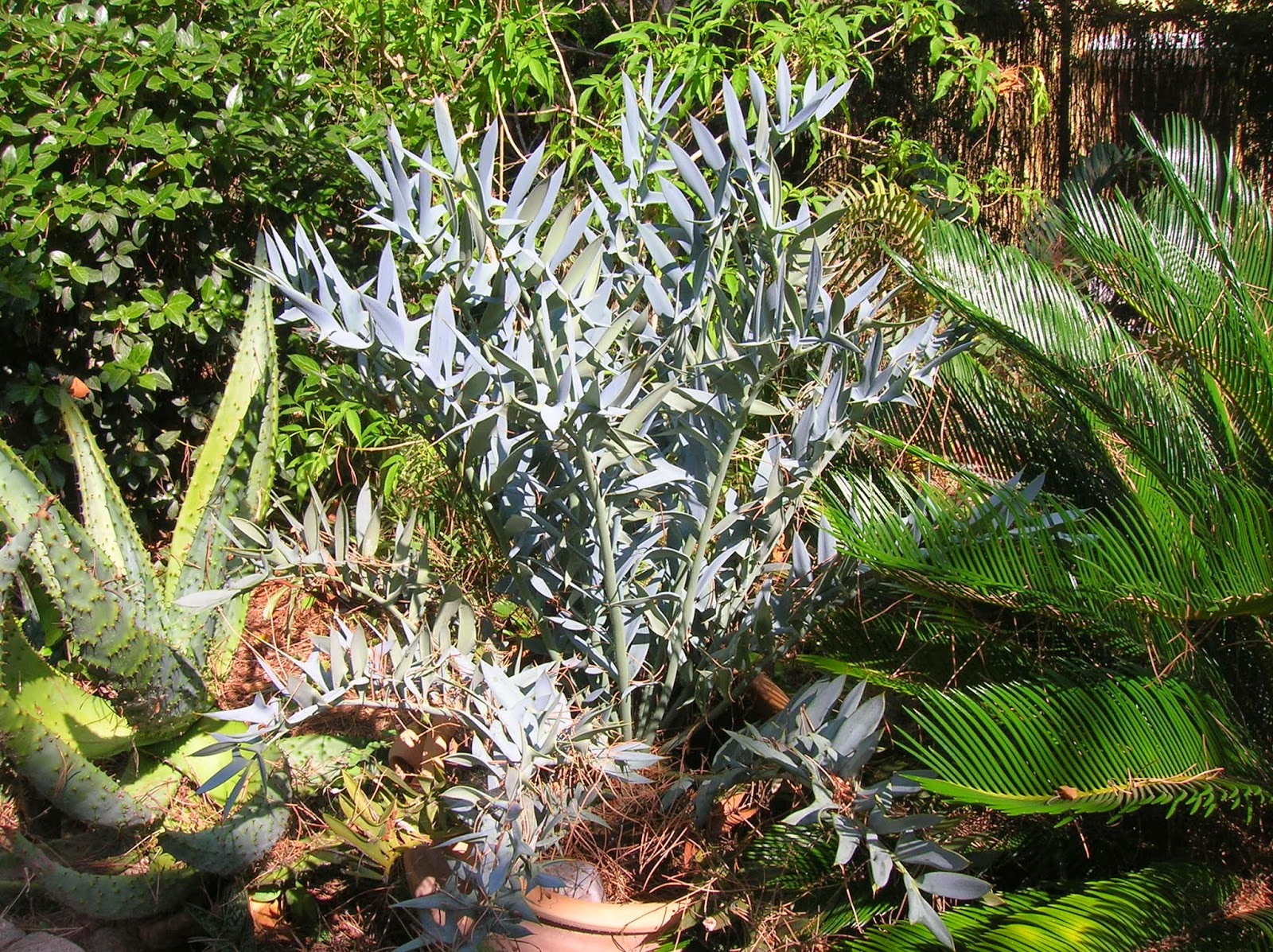
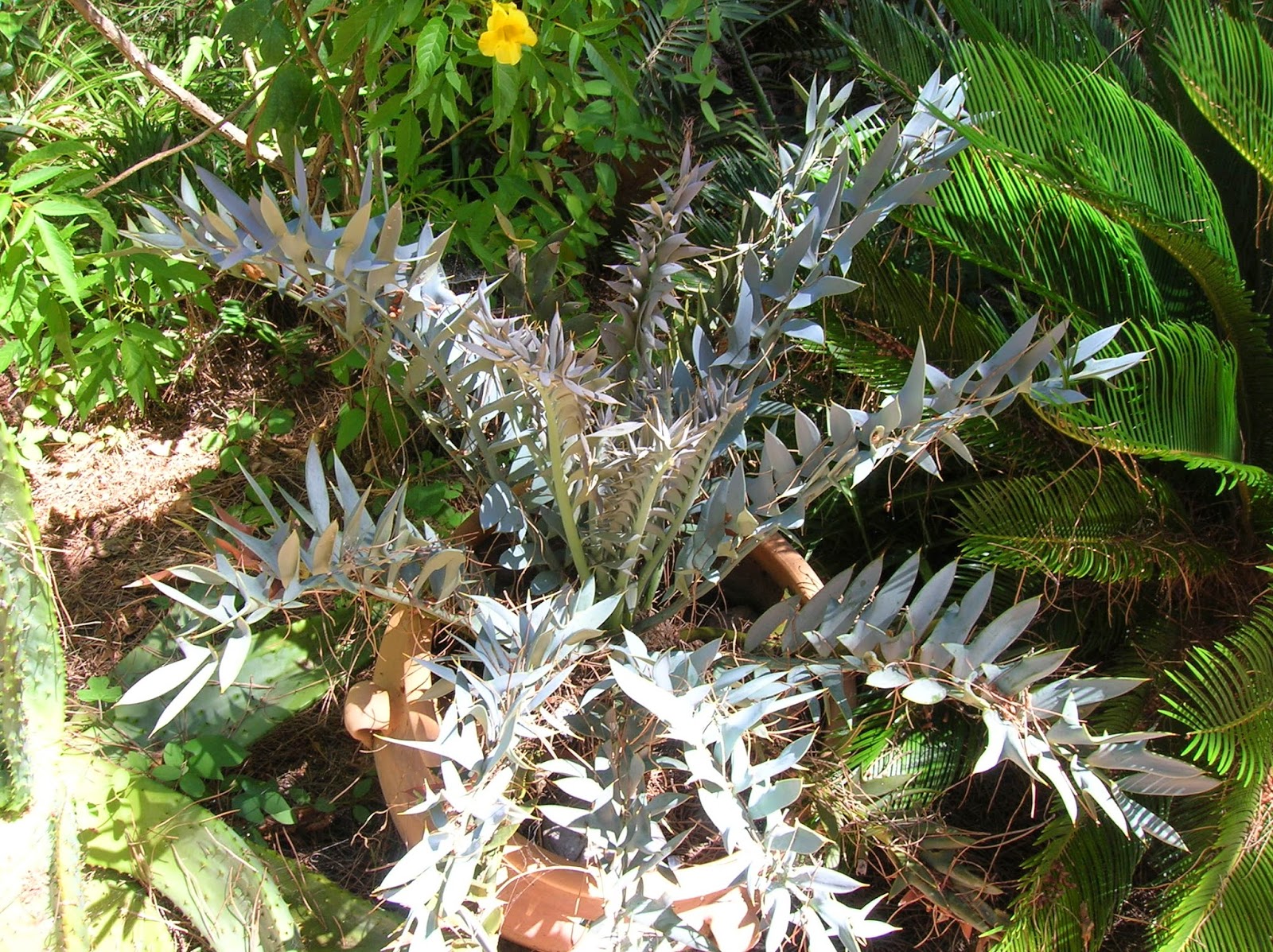
ENCEPHALARTOS HORRIDUS


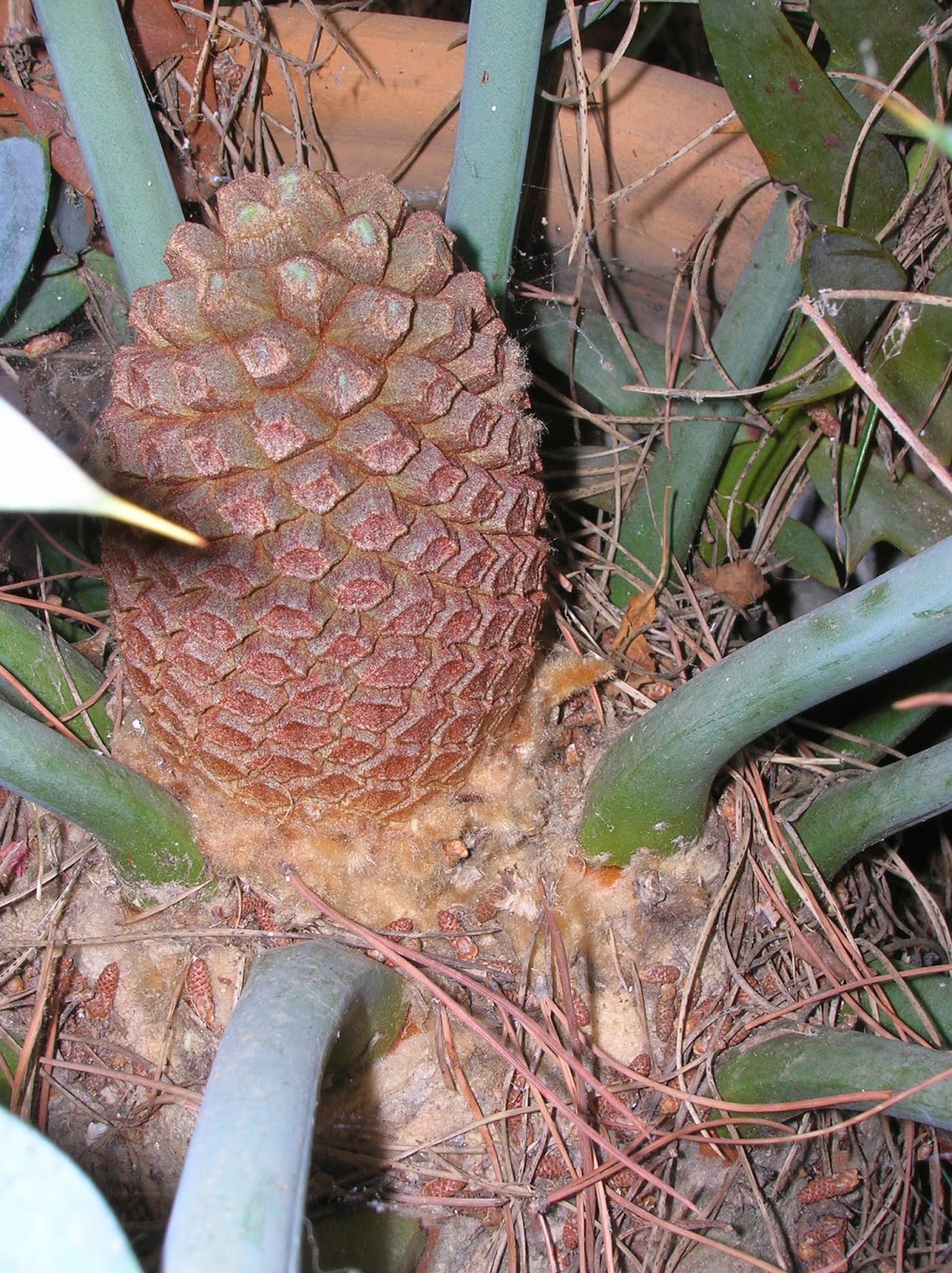
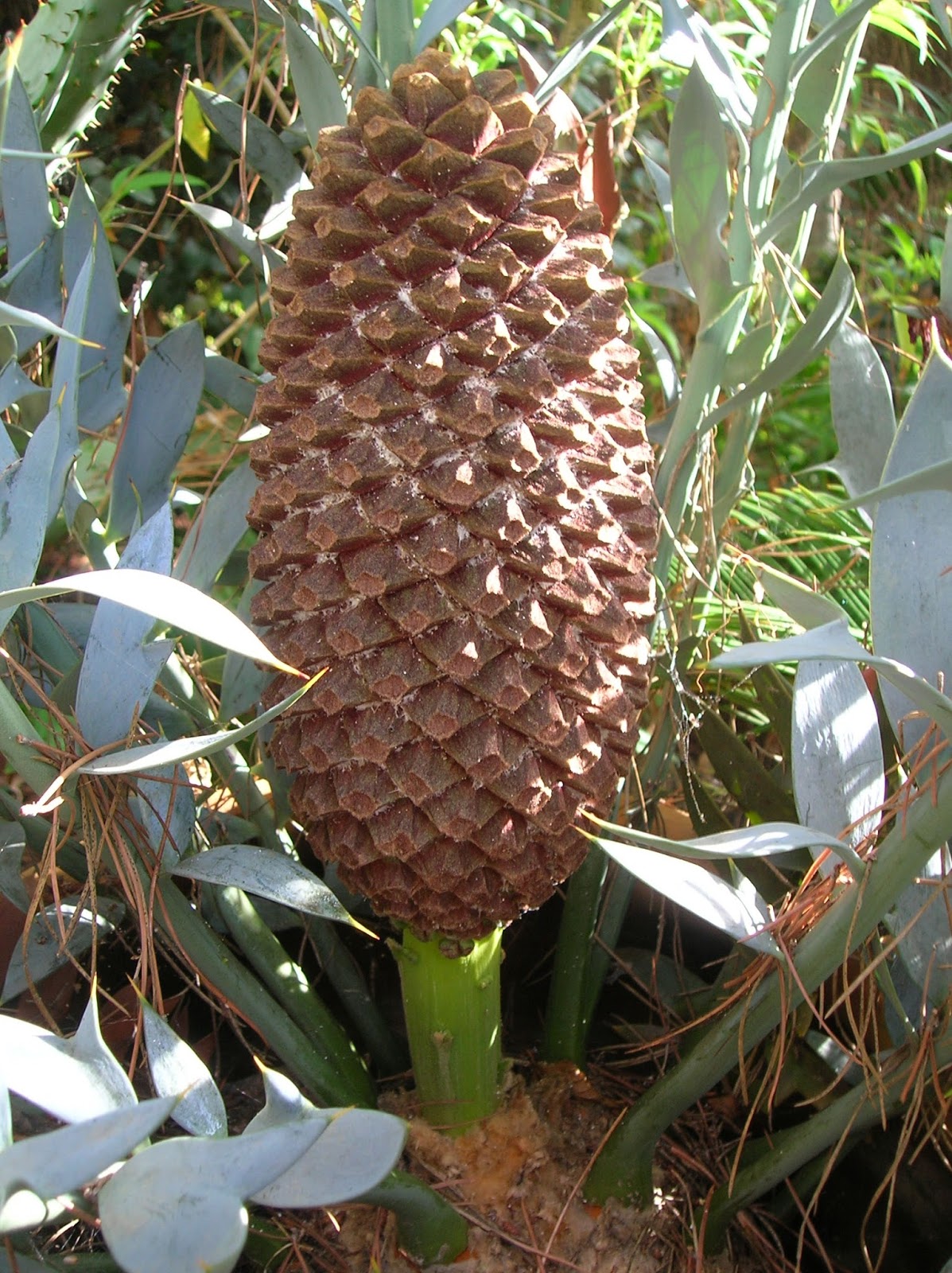
Con cono masculino - With male cone


PRIMER CONO (OTOÑO 2017)


ENCEPHALARTOS HORRIDUS

Origen: Sudáfrica (Este de la Provincia de El Cabo)

Encephalartos horridus es, quizás, la "más azul" de todas las "cycas azules". Puede desarrollar con el tiempo (muuucho tiempo) varios troncos de hasta 60 cm y sus hojas son rígidas y espinosas y de un color verde azulado, más intenso cuando están expuestas a pleno sol. Gusta de exposiciones soleadas y calurosas.

Es muy similar a Encephalartos trispinosus.

Soporta heladas débiles sin problemas.


English version:
Origin: South Africa (Eastern Cape Province)
Encephalartos horridus is the "bluist" of all "blue cycads". It can develop (very slow growing unfortunately) a clump of short stems up to 60 cm. Its leaflets are very rigid and spiny, with a striking blue-green color, depending of sun exponsure. It likes sunny and hot growing conditions.
It´s very similar to Encephalartos trispinosus.
It withstands light frosts without problems.


Actualizado a 03/12/2017