miércoles, 8 de julio de 2009

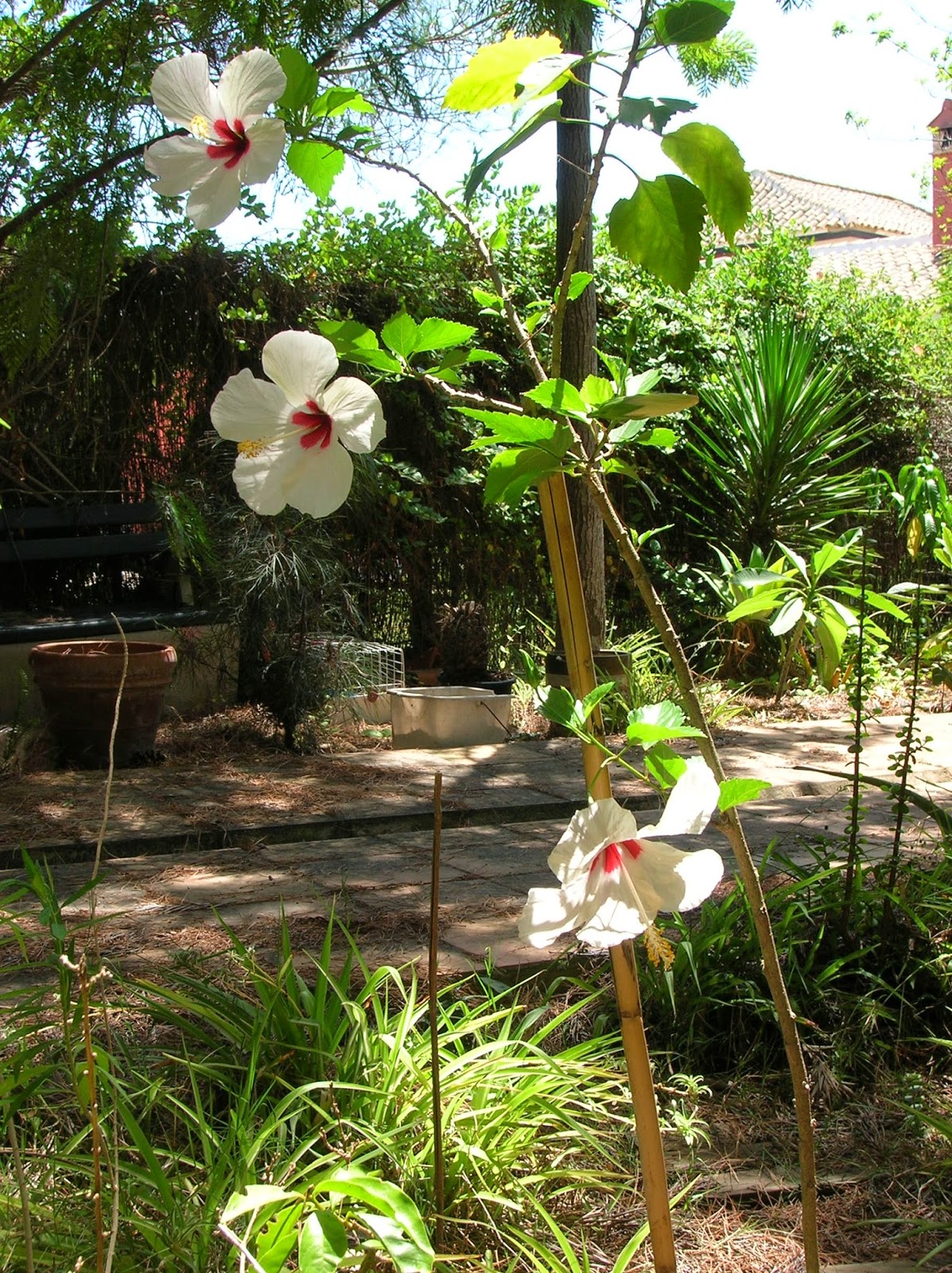
HIBISCUS ROSA-SINENSIS


HIBISCUS ROSA-SINENSIS

Origen: a pesar de su nombre específico (rosa-sinensis significa "rosa de China"), estas plantas son nativas de algún lugar del Océano Indico, desde donde comenzaron a diversificarse y a hibridarse con otras especies para dar lugar a la gran variedad de formas y colores existentes hoy día.

En algunos países anglosajones se conoce como "shoe flower", por la costumbre jamaicana de usar las flores caídas para lustrar los zapatos.

Las flores de todas las especies de Hibiscus que conozco sólo duran un día.

Se reproducen por esquejes.

Soporta sólo heladas débiles.


English version:
Origin: in spite of its specific name (rosa-sinensis means "chinese rose"), the original plants are native to some place from Indian Ocean, from where it begun to hybridize into the many cultivars we know today.
Common names: chinese hibiscus, shoeflower, red hibiscus.
The name shoeflower is jamaican, from the use of crushed flowers to polish shoes.
Flowers of all hibiscus species I know only last a day.
Propagation is by cuttings.
It withstands only light frosts.


Actualizado a 04/10/2014

martes, 7 de julio de 2009

CAMPSIS RADICANS


CAMPSIS RADICANS (sin. Bignonia radicans, Tecoma Radicans)

Origen: Sureste de Estados Unidos

Es una trepadora vigorosa, de hoja caduca y tronco leñoso, que trepa mediante raíces aéreas (como la hiedra), aunque no son muy resistentes por lo que necesita soporte adicional.

Puede llegar a medir 15 metros aunque se recomienda podarla para incentivar la floración.

Se multiplica por semillas.

Resistente a las heladas.


English version:
Origin: Southeastern USA.
Common name: common trumpet creeper
Vigorous, woody stemmed, deciduous vine that climb by aerial roots (like ivy), although they are not strong enough to support the weight of the vine, so it needs additional support.
It can reach a height of 15 metres, although it´s recommendable to trim the plant to encourage floration.
Propagation is from seeds.
Frost hardy.


Actualizado a 19/10/2012

lunes, 6 de julio de 2009

PLECTRANTHUS NEOCHILUS


PLECTRANTHUS NEOCHILUS

Origen: desde el sureste de Africa hasta el sur de Arabia.

Esta planta crece con rapidez formando matas y "autoreproduciéndose" de forma natural por acodo simple, pues los tallos enraízan con facilidad al tocar el suelo.

Las hojas tienen un fuerte olor a almizcle.

Es muy resistente a la sequía.

Se reproduce muy bien por esquejes.
No soporta los fríos intensos que dañan bastante a la planta.


English version:
Origin: from southeastern Africa to southern Arabia.
This plant have a mat-forming habit to grow. It "selfpropagates"easily by simple layering, as stems root easily once they touch the ground.
Leaves have a strong musky smell.
It´s fairly drought resistant.
It doesn´t withstand low temperatures, which damage a lot the plants.

domingo, 5 de julio de 2009

ALOE PERFOLIATA


ALOE PERFOLIATA  (sin. Aloe mitriformis)

Origen: Sudáfrica, provincia de El Cabo.

Este áloe en miniatura es nativo de una zona climática virtualmente idéntica a Recregarden, con inviernos húmedos y suaves y veranos cálidos y secos.

Se cultiva en rocallas y como cobertora.

Florece en verano, a diferencia de la mayoría de las especies, que lo hacen a finales de invierno. 

Nota: tenía etiquetado a este aloe como Aloe brevifolia, una especie muy parecida. La principal diferencia es que brevifolia tiene tallos florales simples y no ramificados y los de perfoliata son ramificados.  


English version:
Origin: South Africa, Cape Province.
This little aloe is native to Cape Province, whose climatic characteristics are nearly the same of Recregarden´s : cool and wet winters and hot and dry summers.
It´s very popular for growing in rockeries and as groundcover.
Unlike most aloes which flower in late winter this species flowers in summer. 
It withstands light frosts.
Note: I had this aloe labelled as Aloe brevifolia which is a very similar species. Main difference are flower stalks, unbranched in brevifolia and branched in perfoliata. 


Actualizada a 07/10/2016

sábado, 4 de julio de 2009

IPOMOEA INDICA


IPOMOEA INDICA

Origen: incierto, ampliamente distribuida por países tropicales y subtropicales.

La campanilla azul es una trepadora que en zonas libres de heladas puede ser muy invasiva.

Las flores duran sólo un día, de ahí su nombre anglosajón de "gloria de la mañana o del amanecer". Por la mañana son azules pero con el transcurso del día cambia su color a morado y se cierran. (ver fotos)

Es sensible a las heladas pero tiene raíces tuberosas que aseguran que, si no se hiela el suelo, aseguran el rebrote en primavera. El boniato o batata es pariente próximo (Ipomoea batatas)

Se autoreproduce muy bien porque los tallos enraízan con facilidad cuando "tocan tierra".


English version:
Origin: uncertain. Widespread throughout tropical and subtropical countries.
Common names: common morning glory, blue dawn flower.
Common morning glory is a twister climber which, in frost free areas, could be very invasive.
Flowers last only a day. They open a rich blue color in the morning, fade to purple during the day and finally die.
It´s frost tender but its tuberous roots ensure resprouting in spring if ground doesn´t freeze. Sweet potato is a close relative (Ipomoe batatas)
It "self-propagate" easily by layering as stems root easily once they touch the ground.

jueves, 2 de julio de 2009

CLEMATIS "WESTERPLATTE"


CLEMATIS "WESTERPLATTE"

Origen: este híbrido fue creado en Polonia y recibe este nombre en honor a una batería militar en Polonia que fue bombardeada el 1 de septiembre de 1939, marcando el inicio de la Segunda Guerra Mundial.

Las clematis son un amplio grupo de trepadoras propias de climas más fríos y, sobre todo, más húmedos, que Recregarden.

Las clematis prefieren crecer en un sitio soleado pero con sus raíces en un lugar fresco, húmedo y sombrío.

Este cultivar es caducifolio y florece a mediados o finales de primavera, con flores de más de 10 cm de diámetro.


English version:
Origin: this hybrid is named to commemorate a militar battery in Poland which was bombarded on 1st of september of 1939 marking the beginning of the Second World War.
Clematis is a big group of climbers native to cooler and, above all, moister climates than Recregarden.
They like sunny places but with the roots in a fresh, moist shady place.
This cultivar is deciduous and flowers in mid or late spring with flowers more than 10 cm wide.